
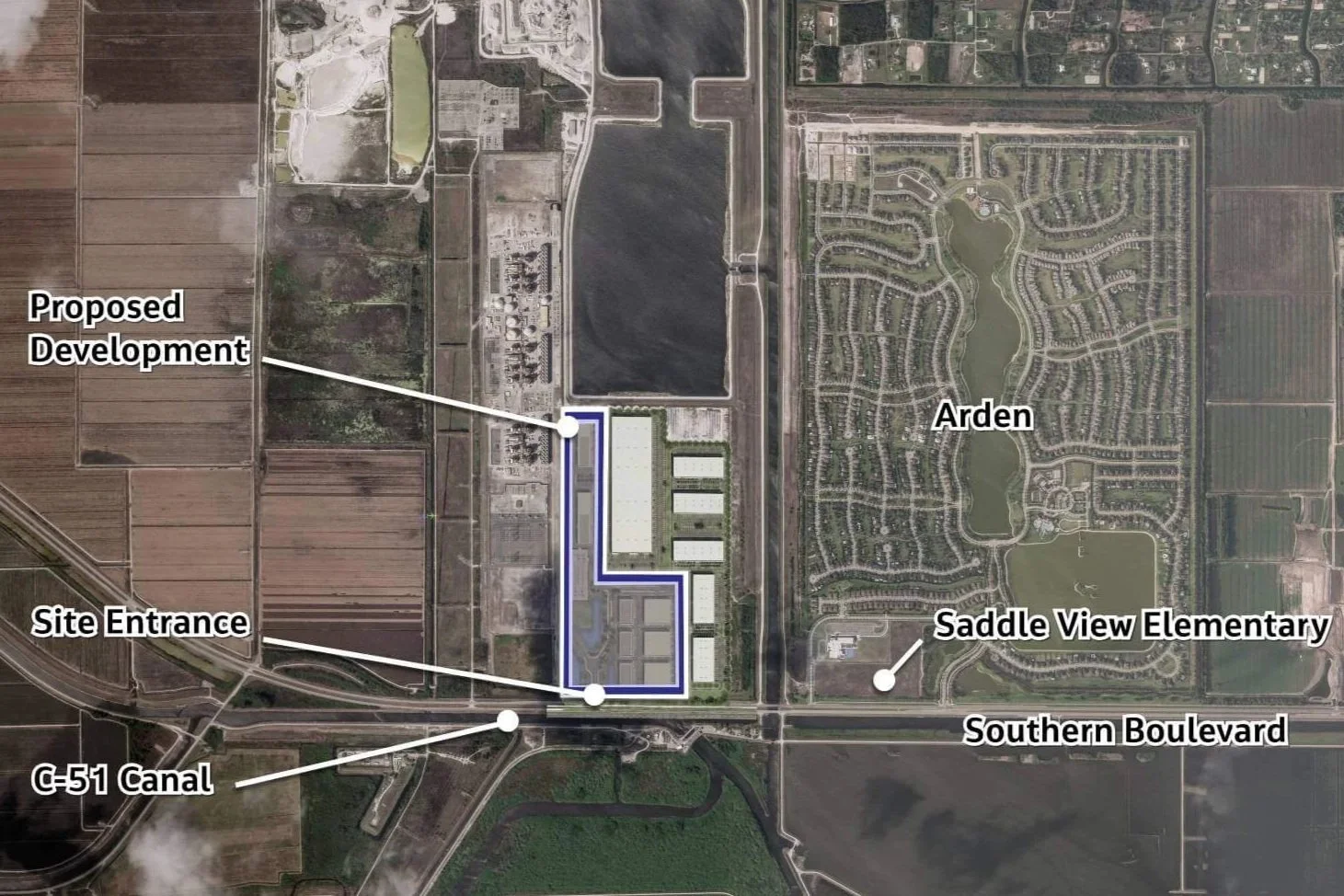
Project Tango is a proposed hyperscale artificial intelligence data center that developer PBA Holdings intends to construct approximately 1,200 feet west of the Arden residential community in Palm Beach County, and less than 1,000 feet from Saddle View Elementary School.
As demand for cloud computing and artificial intelligence continues to accelerate, hyperscale data centers have emerged as a critical class of digital infrastructure. However, facilities of this scale present unique challenges to traditional land-use planning, utility capacity, environmental management, and community compatibility—particularly when sited near residential neighborhoods and schools.
From the outset, the developer has released limited technical information regarding the scope and operational characteristics of Project Tango. Early assumptions suggested that the facility could exceed a continuous electrical load of 1 gigawatt (GW)—a level of consumption comparable to that of a mid-sized city. More recently, information disclosed to WPBCA indicates that the initial buildout is planned for approximately 600 megawatts (MW) of capacity. The developer has not provided clarity regarding potential future expansion or ultimate buildout capacity, particularly after transfer of the property to an end user.
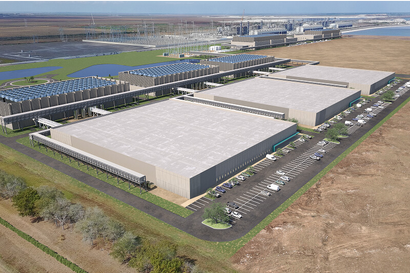
Cooling infrastructure for a facility of this magnitude is substantial. Based on current disclosures, the project is expected to include approximately 265 industrial chillers, 795 high-capacity fans, and an undisclosed number of water pumps. These figures do not appear to account for additional cooling requirements associated with five planned warehouse structures, support buildings, or standard HVAC systems within the data center itself. The cumulative mechanical systems required for continuous operation raise considerations related to noise generation, thermal discharge, water consumption, and visual impact.
Although data centers are typically classified as “light industrial” uses under conventional zoning frameworks, hyperscale facilities operate at a scale and intensity more closely aligned with heavy industrial or utility-scale infrastructure. Continuous high-load power demand, the need for on-site electrical substations, and reliance on backup generation systems introduce operational characteristics that differ significantly from traditional light industrial development.
These factors raise important questions regarding compatibility with surrounding land uses under Palm Beach County’s Unified Land Development Code (ULDC). In particular, the proximity of Project Tango to established residential communities and an active elementary school warrants careful evaluation of potential impacts, including but not limited to:
Importantly, Palm Beach County is not alone in confronting these issues. Across the United States, communities in regions such as Northern Virginia, Arizona, Texas, and parts of the Midwest have increasingly raised concerns about the rapid expansion of hyperscale data centers.
While individual components of the project may meet existing regulatory thresholds, the cumulative and long-term impacts of a hyperscale data center of this size require comprehensive analysis. Projects of this nature highlight the increasing speed at which large-scale developments can move through zoning and approval processes when driven by significant economic demand.
The Western Palm Beach Community Alliance will continue to actively advocate on behalf of western communities and their residents—working to ensure transparency, accountability, and thoughtful planning in all phases of this project. We encourage residents to stay informed, participate in public meetings, and make their voices heard as decisions are made that will shape the future of our region.